
Make room for others.
Listen to teammates, invite an idea and check that everyone understands the plan.
A connection to exploreHelping a quieter classmate contribute to a group project.
About Squid Esports
We give teenagers’ interest in gaming a purpose—with live coaching, shared challenges and opportunities to practise leading, listening and working with others.
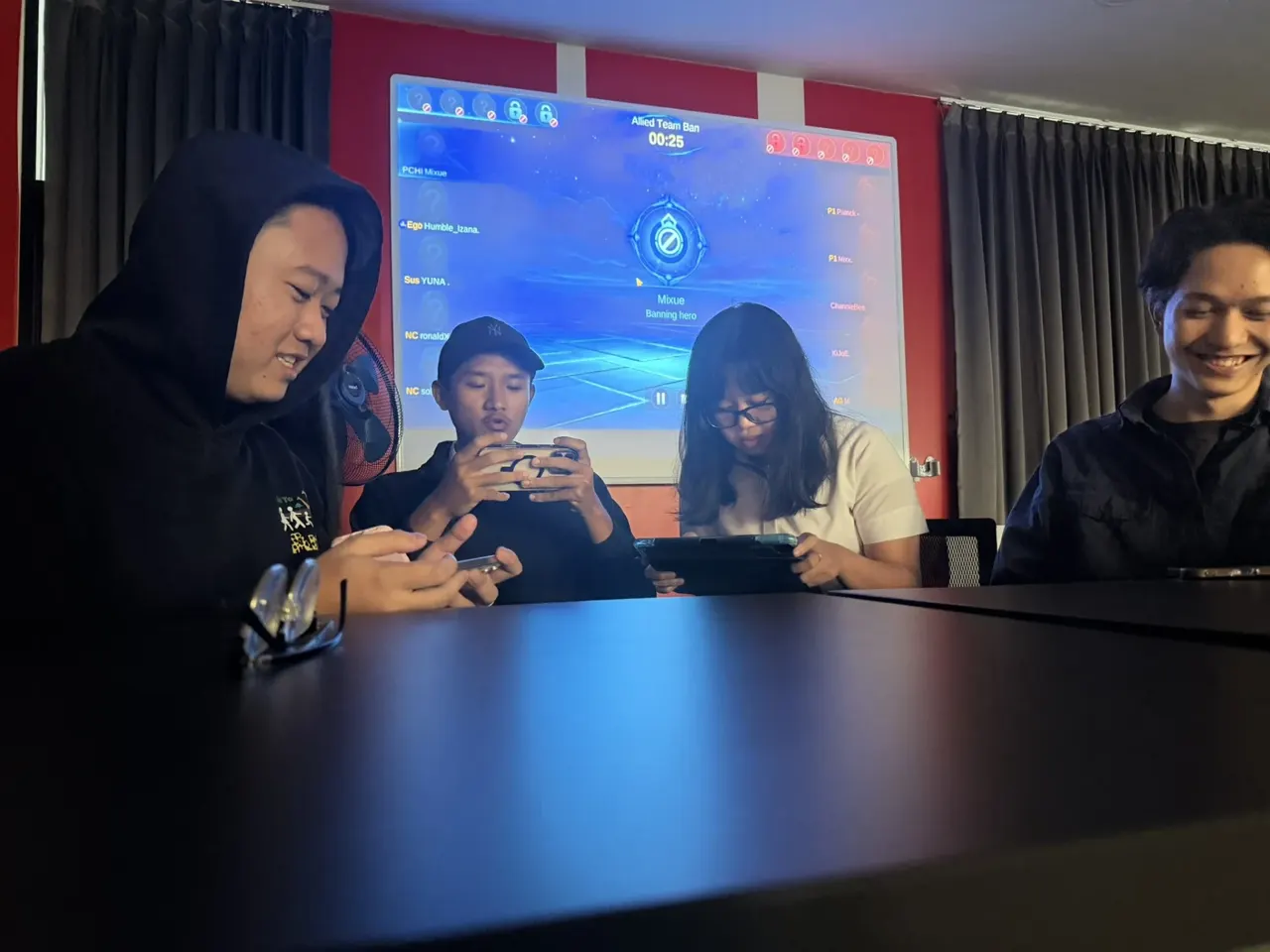
Why we’re here
If your teenager enjoys gaming, that interest can become a starting point for learning. A coach can give the session a clear goal, help everyone contribute and turn a difficult moment into something to reflect on.
Squid Esports brings Squid Academy’s experience in esports education directly to families. You don’t have to wait for your school to offer a programme.
Make guided esports learning accessible to families, with leadership, teamwork and communication at its heart.
A future where young people can explore their interests, contribute confidently and see more possibilities for themselves.
Leadership through esports
A shared game gives teenagers a reason to communicate, make decisions and support each other. A coach helps them practise these leadership habits, reflect on their choices and consider how to use them beyond the game.
Listen to teammates, invite an idea and check that everyone understands the plan.
A connection to exploreHelping a quieter classmate contribute to a group project.
Share useful information, explain a decision and adapt when something changes.
A connection to exploreExplaining who is doing what when working towards a shared deadline.
Reflect on a mistake, give constructive feedback and choose something useful to practise.
A connection to exploreTaking responsibility for your part when a team task doesn’t go to plan.
These are habits to practise, with coaching and reflection. Applying them at school or in everyday life takes further practice; playing a game alone does not guarantee that transfer.
See a coaching exampleThe people behind Squid
Meet the founders, specialists and advisors behind Squid Academy’s educational approach. Their work across education, coaching and technology forms part of the experience we bring to families through Squid Esports.

Co-Founder & CEO

Co-Founder & Head of Product

Growth Partner

Head of Finance

Esports Education Advisor

Esports Education Advisor

Esports Advisor & RL Coach

Social Media Coach

Curriculum Designer

Esports Performance Coach

Head of IT

Collegiate Esports Ed Advisor

AI Education Advisor

Sports & Exercise Coach

Education Advisor

Esport Tournament Advisor
1–16 of 16 team members
Names, titles and original portraits from Squid Academy’s team page ↗ · checked 3 November 2026.
Our educational roots
Squid Academy’s work with schools and universities informs our approach. These examples show that institutional experience; they are not results from the new family programmes.
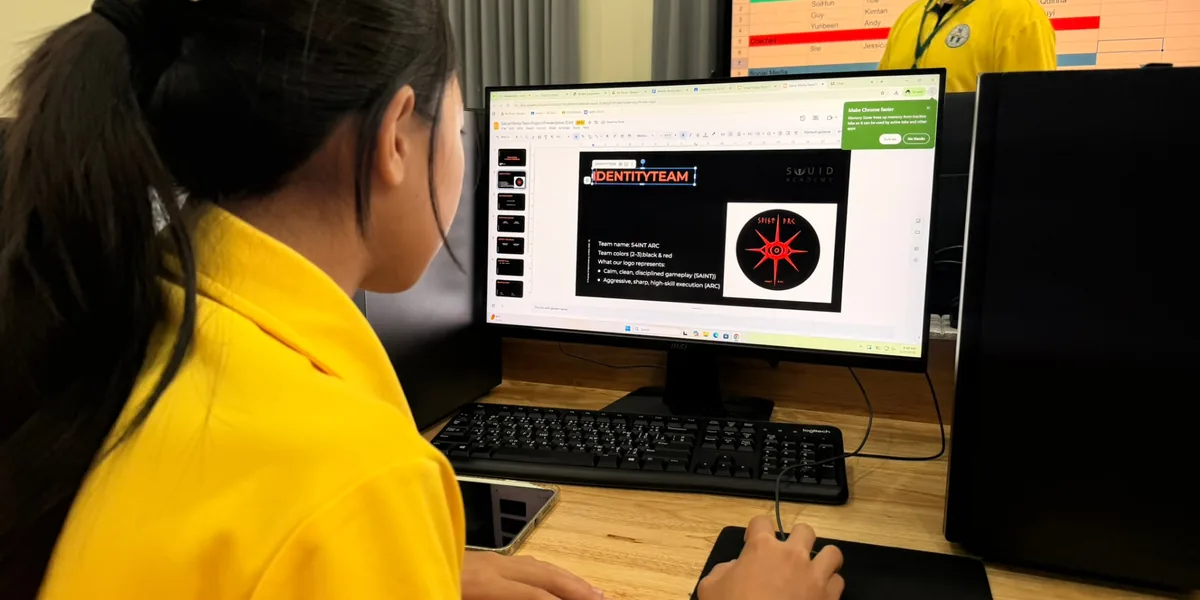
School learning · Squid Academy
Projects give students a reason to organise ideas, create something together and explain their decisions. This classroom example shows a student working on a team presentation.
Explore the Academy’s school approach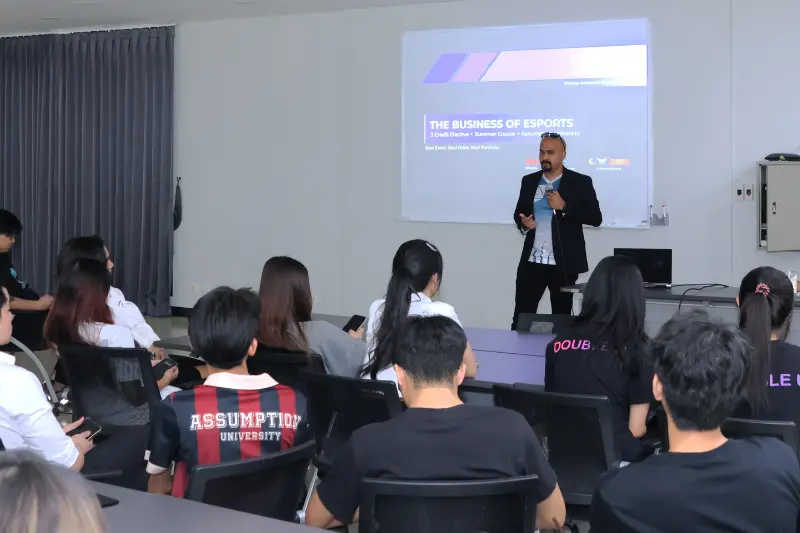
University learning · Squid Academy
The Business of Esports connects learning with planning and running events. Students explore how people lead, communicate and contribute across different industry roles.
Explore the Academy’s university approach
Squid Academy’s earlier Education Alliance Finland evaluation recognised its educational design. The Academy states that its 2026 renewal is under review.
View the evaluation context ↗
The Academy is a registered AQA Unit Award Scheme centre. Recognition relates to selected approved learning outcomes, rather than every esports activity or coaching session.
Read about the Academy’s recognition ↗Proven Through Squid Academy
Squid Esports is the direct-to-family program built on Squid Academy's curriculum, teaching methods and experience with schools and universities.

Regents International School Pattaya

Sri Emas International School

Dwi Emas International School

Pattaya City 11 School

Assumption University of Thailand

Mooltripakdee International School

Holy Redeemer School Khon Kaen

Miami Community Charter School

Raffles University

International School Eastern Seaboard

Damascus Gaming

ALPHA Esports & Technology

Squid Esports Pod
1–13 of 13
Assumption University
At Assumption University in Bangkok, 85 students from five faculties completed Squid Academy's Business of Esports elective and rated the course 4.49 out of 5.
The mix of faculties matters. It shows that Esports education can connect with students across different academic interests, not only those already planning a career in gaming.
Squid Academy case study
Read the University Case StudyMooltripakdee International School
At Mooltripakdee International School, 87 learners aged around 11 took part across four class sections and completed 25 team presentations.
Across those sections, learners worked toward collaborative presentations rather than completing the program as passive participants. This was Squid Academy's youngest institutional cohort at the time.
Squid Academy case study
Read the School Case StudyThese results come from Squid Academy’s school and university programs. Individual results for family learners will vary.
Two ways to begin
Leadership, communication and teamwork belong in both tracks. Choose a learning experience around your teenager’s interests and goals.
Explore the wider esports industry through a dedicated curriculum and collaborative activities. Practise sharing ideas, taking responsibility and helping a team work towards a goal.
The starting pointLearning about the industry while developing leadership and transferable skills.
Explore LeadershipWork with a coach on your game, decisions and practice habits. Communicate more clearly with teammates and learn from feedback—whether you play for enjoyment, improvement or competition.
The starting pointThe player’s game and goals, with leadership and teamwork woven into coaching.
Explore CompetitiveA bigger world to explore
Esports brings together competition, media, events, technology and business. Your teenager can explore where their interests fit—and why leadership matters in the teams behind the players.
An interest in speaking & explaining
Roles to explore: shoutcasting, presenting and broadcasting.
Leadership in action: listen to a co-presenter, make the story clear and help an audience feel included.
An illustrative activity: explain a match moment together, giving each presenter a clear role.
An interest in creating & storytelling
Roles to explore: content creation, journalism and social media.
Leadership in action: agree a message, check information and represent other people responsibly.
An illustrative activity: create a short match recap, sharing research, writing and editing responsibilities.
An interest in organising & helping
Roles to explore: team management, events and community.
Leadership in action: coordinate different needs, share responsibilities and follow through on commitments.
An illustrative activity: plan a small team event, agree who owns each task and check that everyone can participate.
An interest in business & relationships
Roles to explore: marketing, sponsorship and partnerships.
Leadership in action: understand another person’s goals, explain a proposal and make realistic commitments.
An illustrative activity: develop a team sponsor idea and present why it could be useful to both sides.
Illustrative exploration ideas, not a confirmed Careers Labs syllabus or a promise of a job, scholarship or professional playing career.
Understanding the esports industry
Esports is organised competitive gaming. Around the matches are teams, tournaments, broadcasts, sponsors and technology—bringing together people with different skills.
The players are the most visible part. Events also need people to plan schedules, tell stories, support a team and build relationships. That is why we help teenagers explore leadership alongside their interest in playing.
Organisers plan events, officials manage match rules and operations teams keep the day on track.
Presenters, producers and creators help audiences follow the action and connect with the people behind it.
Coaches, analysts and managers coordinate practice, feedback and the people working towards a shared goal.
Marketing, partnerships and technology teams help organisations reach audiences and deliver their work.
Explore real role descriptions in the British Esports careers guide ↗
Esports & higher education
Some universities support talented esports players alongside their degree studies. Others also recognise leadership and contributions to a gaming community.
An esports scholarship does not always mean studying an esports degree. Each university sets its own academic, playing and participation requirements.
United Kingdom · Degree study
£2,000 per year
Its esports scholarship is open to UK and international students across undergraduate and postgraduate programmes. Applicants need an offer of study and must demonstrate esports talent.
Recipients combine their studies with esports practice, competition and satisfactory academic progress.
Check Roehampton’s requirementsUnited States · Varsity esports
US$3,000–6,000 per year
UC Irvine lists partial scholarships for its esports athletes. Team members must be enrolled students; selection considers elite playing ability, competitive experience and a strong academic record.
UCI also has separate awards recognising community contribution and leadership. Availability and application cycles vary.
Check UC Irvine’s requirementsOfficial examples checked 3 November 2026. These are independent university awards, not Squid scholarships. Selection is competitive and taking a Squid programme does not guarantee an award or admission. UCI’s community and leadership award examples (2026 cycle closed) ↗
Start with the learner. Help your teenager explore an interest, build useful habits and discover what they enjoy contributing. Education and career choices can develop from there.
Start with a free live trial
Meet the teaching approach and ask your questions. See how guided esports learning could fit your teenager’s interests, goals and opportunities to develop as a leader.
A live coach. No payment required. No obligation to enrol.