
Esports Roles
How Esports Coaches Review Match Replays and Give Feedback to Teens
In this guide
A player crosses a gateway just as their teammate disappears behind a wall. A second later, the replay shows the two players split up. It looks obvious from above. An esports coach might pause a few seconds earlier and ask, “What could you see when you decided to move?”
That question is where replay review gets useful. A coach can use one moment to understand a decision, point out a habit worth keeping and agree on one change the player can test. British Esports describes the coach’s role as working directly with players to identify strengths and weaknesses and develop strategies. An analyst can also study footage for patterns. The coaching question is what the player will do with that information in practice. British Esports on the coach and analyst roles
Pause Before the Decision
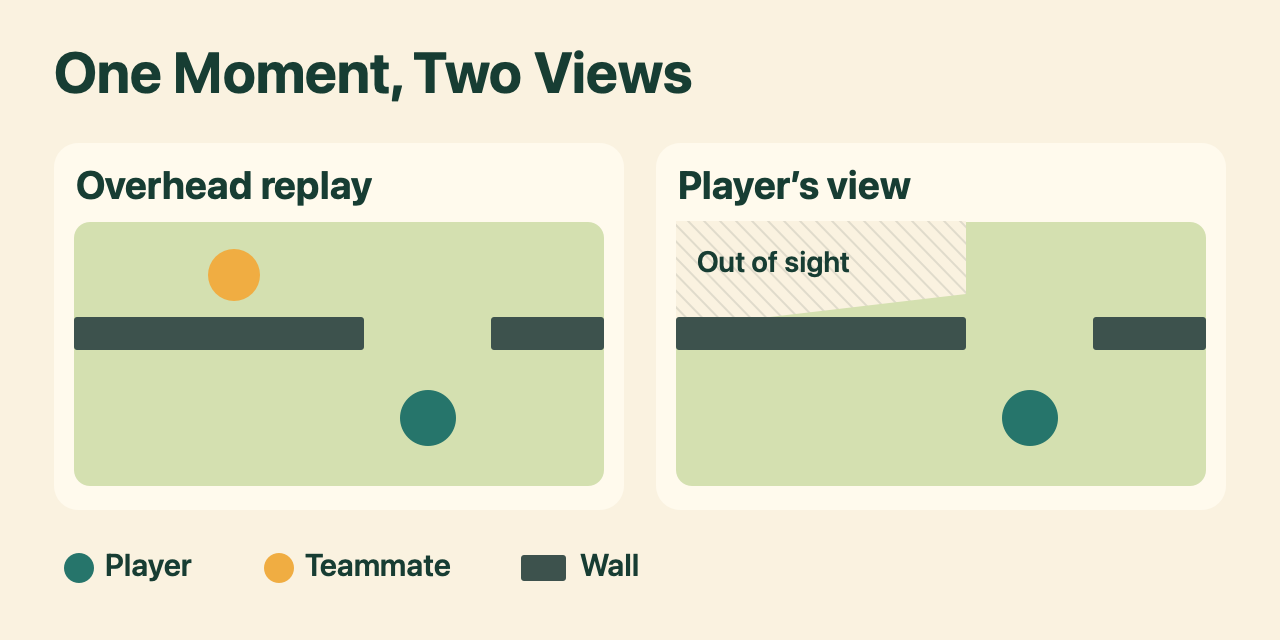
In this fictional example, two teammates have agreed to cross a gateway together. The first player sees that the opening is clear. Their teammate is behind the wall, out of sight. The first player says “Go” and moves straight away.
From an overhead view, the coach can see both positions. The first player’s view tells a different story: the opening was clear, but the player couldn’t see whether their teammate was ready. The coach asks, “When you said ‘Go’, did you hear a reply?” If the recording doesn’t include team audio, they ask what the player remembers hearing. The camera can show where someone was. Their account helps explain why they moved.
How Coaches Can Talk Through a Mistake with a Teen Player
Before giving feedback, check whether the player is ready to talk. After a tough loss, “Do you want a minute, or are you ready to look at one moment?” gives them room to settle. If the team is reviewing together, use the clip to discuss the shared call. Give individual feedback without putting a player on the spot in front of teammates. For ways to settle the conversation first, see how teens can reset after a gaming loss.
- Ask what they saw, then give them time to answer. “What were you looking at just before you crossed?” Let the player finish. They may have heard a different call or understood the plan differently. UNICEF’s guidance for parents recommends open questions and active listening when talking with teens. Coaches can use that same approach to understand the player’s decision. UNICEF on communicating with teenagers
- Describe the action and its effect. “You checked the opening and made a clear call. You crossed before you knew your teammate was ready, so you ended up on opposite sides.” This gives the player something specific to keep and something they can change. Rutgers Youth Sports Research Council on giving young players feedback
- Ask the player to say what they’ll try next. “What will tell you it’s time to move?” The player might answer, “I’ll ask if they’re ready and wait for the reply.” If they’re unsure, model the call once and have both teammates try it. After the drill, ask, “Did you get the reply before you moved?” If the timing was still off, find out whether the call was missed or the plan was unclear, then try again.
Turn One Observation Into Something to Practise
The team already had a call to move. They add a reply that tells both players they’re ready to cross. Here’s how they rehearse it.
- Wait at the opening. The first player calls, “Clear here. Ready?”
- Listen for the reply. The teammate says “Ready” or uses an agreed signal when they’re in position.
- Move together. After the round, check whether both players had time to answer and cross together.
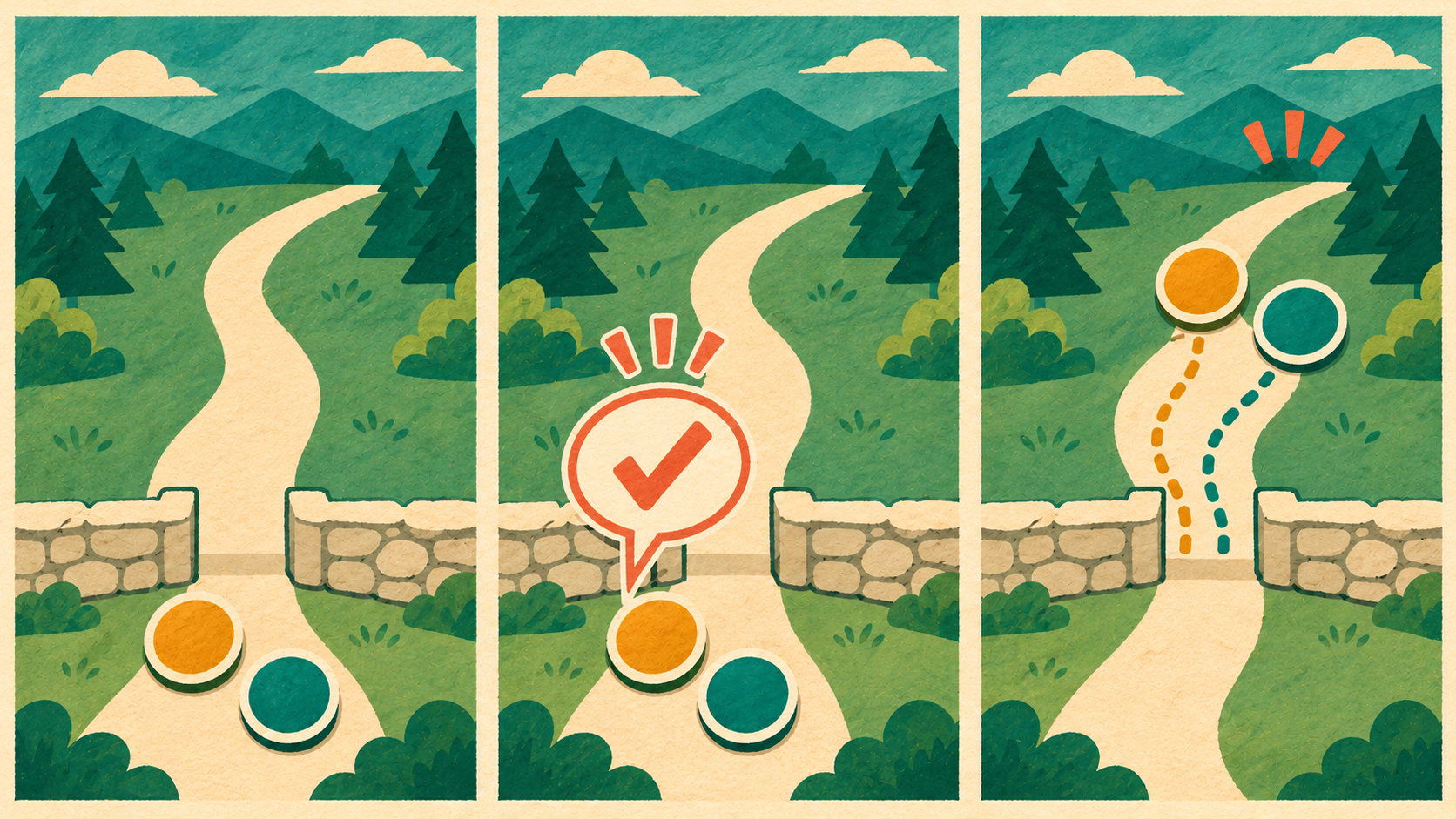
This is a small drill the coach can revisit. The first check is whether the two players used the signal and acted on it. A win or a loss on its own tells them little about whether they managed that. The Education Endowment Foundation’s classroom guidance recommends planning how learners will use feedback. Here, the next drill gives the player a way to use it. Education Endowment Foundation on feedback
For another way to practise choosing one change, see how teammates can review one moment and choose a next step.
What Parents Can Ask After a Replay Review
You can ask, “What did you notice when you watched it back?” and “What will you try next time?” A useful answer might be as simple as, “I’m going to wait for the reply before I move.” If your teen wants to show you the clip, let them pause it where they made their decision and explain what they were paying attention to.
Squid’s one-to-one Competitive coaching uses recorded matches and live gameplay. The coach starts with the player’s game, experience and goals. The gateway example is one illustration of how a coach could connect a recorded decision to the next thing a player practises.
Explore another topic