
SEL
After a Gaming Loss: How Teens Can Rejoin the Team and How Parents Can Help

In this guide
The match ends and someone swears into their mic. Another player says, “We lost because you went in too early.” Your teen feels their face get hot and wants to answer straight away. That’s a good moment to take a break from the conversation and decide what to say when they’re ready.
Feeling frustrated or disappointed after losing a game is understandable. A reset gives the player time to settle, the team a chance to repair the conversation, and everyone something specific to practise. A teen can still feel disappointed when they come back. A useful question is whether they can hear a teammate out and talk about what happened respectfully.
1. Take a Break Before You Reply
Notice what happens just before you snap. You might grip the controller harder, start talking over someone or type a reply you already know will start an argument. Put down the controller, take your hands off the keyboard and give the team a clear message: “I’m frustrated. I’m taking a minute. Please wait before starting another match.”
Stepping away from the screen, getting a drink or sitting quietly are all options. If slow breathing feels comfortable, put both feet on the floor and breathe in and out gently. Keep the pace comfortable. NHS breathing exercises for stress
Before you return, ask yourself, “Can I listen to what my teammate saw?” If you still feel like firing back, take a longer break or let the team know you’re done for the day. Noticing an emotion and choosing what to do with it is an example of self-management, one of the skills in CASEL’s social and emotional learning framework. CASEL’s framework
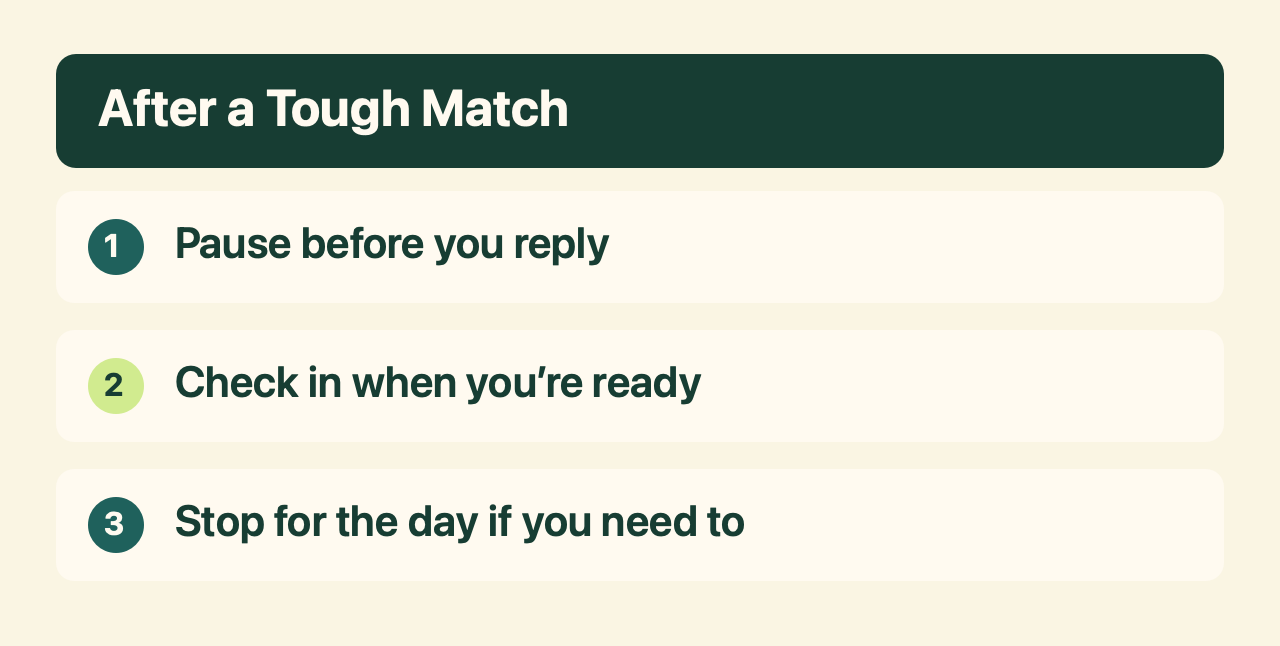
2. Repair the Conversation When You Rejoin
Swearing in frustration and swearing at a teammate call for different responses. If your words were aimed at someone, name what you did and apologise: “I snapped at you after the match. That was unfair. I’m sorry.” Give them time to respond. They may want a break too.
Then describe one moment you can both discuss. “I moved in while two of us were still behind the wall. What could you see from where you were?” A teammate might explain that they missed the call or thought the team was waiting. Hearing their account can help the group work out what needs to change. For more examples, see how to describe what happened before assigning blame.
If someone keeps insulting you or another teammate, you can stop the review and tell a coach, moderator or trusted adult. Online, muting, blocking or reporting may help you step away from the behaviour. eSafety Commissioner’s multiplayer guidance
3. Review One Moment and Choose One Change
Imagine the team lost a round after splitting up near a bridge. They can talk through the moment from memory or look at a replay they already have. Let each player finish explaining what they saw before you agree on a change.

- What worked? “We spotted the same opening and knew which route we wanted to take.”
- Where did we get out of sync? “I said ‘go’ while two people were still behind the wall. I thought everyone had heard the call.”
- What will we try next? “Before crossing, we’ll each say ‘ready’ or use our agreed signal. Then we’ll move together.”
If the team is ready for another round, try that one change. If the group wants to keep training at a slower pace, rehearse the call and response in a practice round. Afterwards, check whether everyone got a chance to signal. That gives the team something specific to learn from, whatever the score. The questions above adapt a short debrief format used in the TeamSTEPPS teamwork curriculum. Agency for Healthcare Research and Quality’s debrief guide
What Parents Can Do After a Tough Match
Acknowledge the disappointment. If they’ve lost again, try, “I know how much you wanted that round to go differently. I’m here.” Give them a moment to respond. A loss can feel harder when they’ve been trying all session to get something right.
Let them choose what comfort looks like. A teen who’s sad after a match might walk over and hug their mum. If your teen reaches for a hug, let that be enough for the moment. If you’re unsure what they want, ask, “Would you like a hug, some company, or a bit of space?” They might want you to sit nearby while they settle. American Academy of Pediatrics guidance on supporting teens during stress
Ask before reviewing the game. Later, when your teen is ready, try, “Do you want me to listen, or would it help to think through what happened?” If they want to review, ask what they wish their teammates had understood. Help them find one sentence they can bring back to the team, such as, “I thought we were all ready. Can we check with each other before we go next time?” It’s fine to leave that conversation for the next practice.
If your teen’s distress or irritability lasts for weeks, becomes hard for them to manage, or affects school, home life or friendships, speak with their doctor or a qualified mental-health professional. If you have questions about medication your teen already takes, ask the clinician who prescribes it. National Institute of Mental Health guidance for families
Explore another topic