
Wellbeing
Digital Wellbeing for Teens: Balancing Gaming, Family Time and Sports

In this guide
It’s a school night. Dinner is ready just as your teen’s friends invite them to play. There’s homework due tomorrow, too. The first thing to put in the plan is time together as a family. A meal, a walk or a chat after dinner gives everyone a chance to catch up. Once that time is set aside, work out where gaming can fit alongside schoolwork, physical activity and sleep.
Make Room for Family Time and Physical Activity
Start by asking, “When can we spend time together this week?” Pick something that fits your family, like a couple of meals with devices put away or a regular evening walk. Let your teen help choose the time and tell their friends when they’ll be free to play. The American Academy of Pediatrics recommends agreeing on media boundaries together and making space for family time, movement and sleep. American Academy of Pediatrics’ Family Media Plan
Make time for movement your teen enjoys and can access. That could be sports practice, cycling, dancing, shooting hoops or a walk together. Regular physical activity supports fitness and mental wellbeing in young people. Putting it in the plan gives it a place in the week even when school and gaming get busy. World Health Organization guidance on physical activity
What One School Night Could Look Like
Imagine a teen who wants to play with friends and be in bed by 10 p.m. Their family plans dinner together, and the teen makes time for a walk before dinner. They agree what homework needs finishing before gaming and leave the last hour before bed to wind down. The American Academy of Pediatrics recommends keeping screens out of that hour and devices out of bedrooms. The times below are one example your family can adapt. AAP’s sleep and screen-time guidance for families
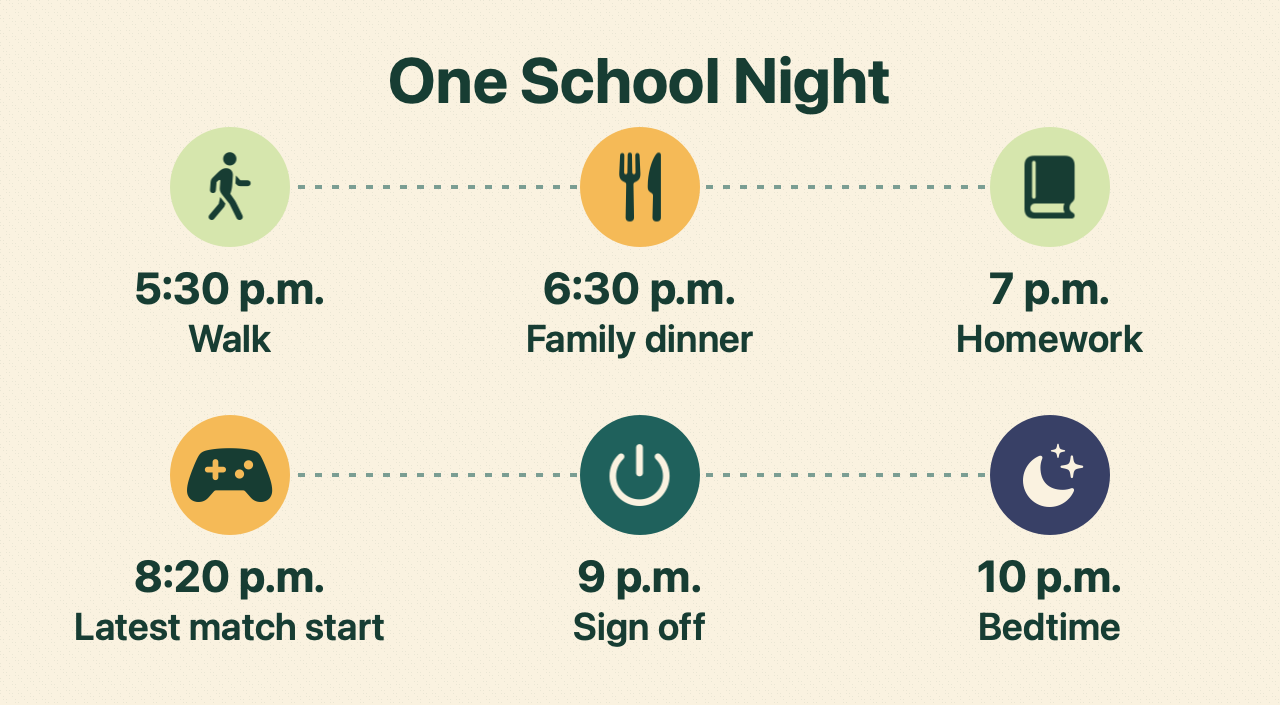
- 5:30 to 7 p.m. Go for a walk, then sit down for family dinner at 6:30 with devices put away. Start homework at 7.
- 8:20 p.m. Latest time to start a match that usually lasts about half an hour. The extra ten minutes leaves room if it runs a little long. Move the last start earlier for longer games.
- 9 p.m. Sign off and start winding down for a 10 p.m. bedtime. Put the device away and mute game notifications if they tend to pull your teen back in.
If homework runs late, there may only be time for a shorter activity with friends. Your teen can tell them before play starts: “I’m signing off at nine, so I’ll join if we have time for a short one.” The agreed finish time helps them choose which match to join.
Knowing When to Stop Is Part of Persevering
At Squid, we encourage teens to keep working on skills they care about and to know when to stop for the day. Both take discipline. A player can stick to their finish time, come back another day and practise the decision they struggled with.
After several losses, the urge to end on a win can make it tempting to keep playing. Frustration can build and another round can cut into family time, movement or sleep. Before joining, ask, “Am I ready to practise something, or am I trying to get that win back?” If they’re still upset or it’s past the agreed last start, they can say, “I’m done for tonight. Save me a spot tomorrow.” For more on what to do in the moment, see how to reset after a gaming loss.
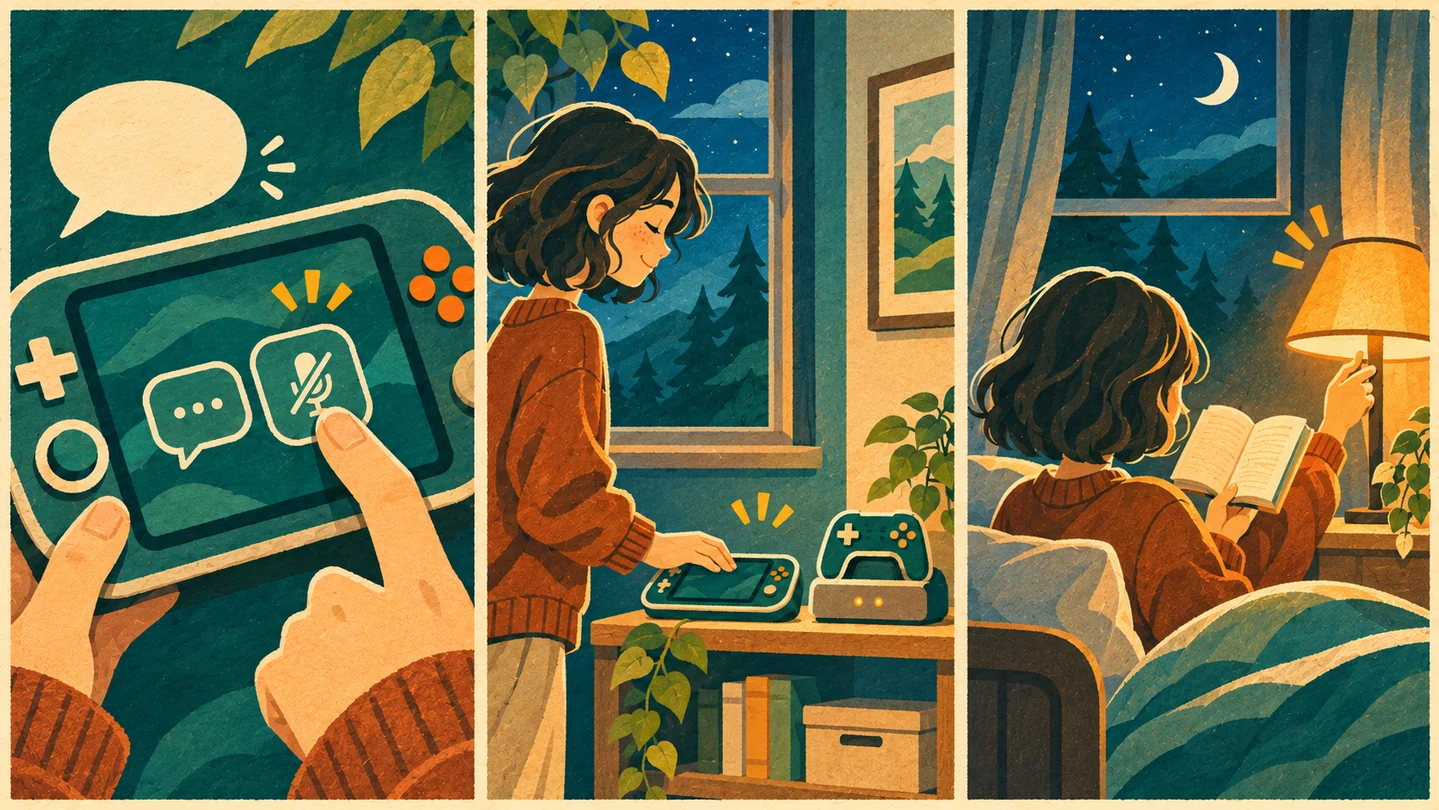
Before signing off, your teen can jot down one thing to try next time, such as waiting for a teammate’s call before moving. That gives them a reason to return with a plan. If the finish time keeps slipping, ask what gets in the way. A shorter game mode or an earlier last start might make it easier to keep the agreement.
Check How the Plan Worked After One Week
Pick a quiet moment and start with family time. Did you get the time together you’d planned? Did your teen have room to move, finish homework, play with friends and wind down? If one part kept getting squeezed, change one thing together. For example, if matches kept running into dinner, tell friends when dinner starts and plan to join afterwards.
You can review chat settings at the same time, especially if your teen has started playing with a new group. Our online gaming safety article shows how to check who can speak to, message or add them. For a wider conversation about media habits, see the AAP’s guidance on what screen use may crowd out.
Explore another topic